How Willie Nelson Sees America

December 28th, 2025

A photograph of Willie Nelson

www.newyorker.com/magazine
By Alex Abramovich

When Willie Nelson performs in and around New York, he parks his bus in Weehawken, New Jersey. While the band sleeps at a hotel in midtown Manhattan, he stays on board, playing dominoes, napping. Nelson keeps musician’s hours. For exercise, he does sit-ups, arm rolls, and leg lifts. He jogs in place. “I’m in pretty good shape, physically, for ninety-two,” he told me recently. “Woke up again this morning, so that’s good.”

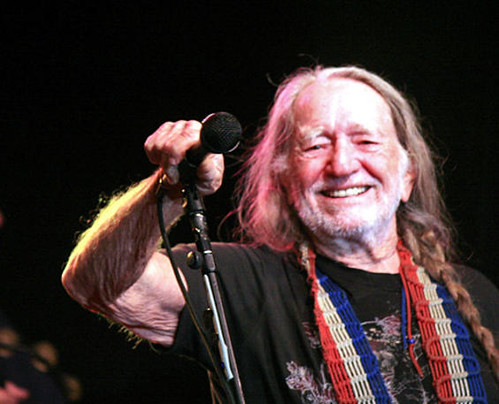
On September 12th, Nelson drove down to the Freedom Mortgage Pavilion, in Camden. His band, a four-piece, was dressed all in black; Nelson wore black boots, black jeans, and a Bobby Bare T-shirt. His hair, which is thicker and darker than it appears under stage lights, hung in two braids to his waist. A scrim masked the front of the stage, and he walked out unseen, holding a straw cowboy hat. Annie, his wife of thirty-four years, rubbed his back and shoulders. A few friends watched from the wings: members of Sheryl Crow’s band, which had opened for him, and John Doe, the old punk musician, who had flown in from Austin. (At the next show, in Holmdel, Bruce Springsteen showed up.) Out front, big screens played the video for Nelson’s 1986 single “Living in the Promiseland.”

“Promiseland” joined Nelson’s preshow in the spring, after ICE ramped up its raids on immigrants. The lyrics speak on behalf of newcomers: “Give us your tired and weak / And we will make them strong / Bring us your foreign songs / And we will sing along.” The video cuts between footage of Holocaust survivors arriving on Liberty ships and of Haitian migrants on wooden boats. In Camden—two nights after the assassination of Charlie Kirk, one night after the State Department warned immigrants against “praising” his murder, hours after bomb threats forced the temporary closure of seven historically Black colleges—the images hit hard. When the video ended, three things happened at once: stagehands yanked the scrim away, Nelson sang the first notes of “Whiskey River,” and a giant American flag unfurled behind him.

“Whiskey River” has been Nelson’s opener for decades. He tends to start it with a loud, ringing G chord, struck nine times, like a bell. On this night, he sat out the beginning and took the first solo instead, strumming forcefully, pushing the tempo. “I don’t know what I’m going to do when I pick up a guitar,” Nelson said. He plays to find out, discovering new ways into songs he’s been singing, in some cases, since he was a child. “Willie loves to play music more than anyone I’ve ever met,” the musician Norah Jones told me. “He can’t stop, and he shouldn’t.” For Nelson, music is medicine—he won’t do the lung exercises his doctors prescribe, but “singing for an hour is good for you,” he says. His daughter Amy put it more bluntly: “I think it’s literally keeping him alive.”

Willie Nelson smoking on his tour bus and laying money on the table.

Last year, Nelson didn’t make it to every performance. On those nights, his older son, Lukas, filled in. At the end of the tour, no one knew if Nelson would go out again; five months later, he did. I started following him in February, in Florida. In Key West, Lukas and Annie flanked Nelson as he sat and rested before going on. Annie had her hand on the small of his back and Lukas on his shoulder; they looked like two cornermen coaxing a boxer back into the ring. Nelson suffers from emphysema. He barely survived COVID-19. (He got so sick he wanted to die; Annie told him if he did she would kill him.) His voice is still inky, he struggles for air, but he stays in charge, or lets go, as the moment requires.

“I’m definitely following Willie,” Nelson’s harmonica player, Mickey Raphael, told me. “He sets the tempo. He picks the songs.” Raphael is tall, with dark, curly hair and the easy swagger of a man who has spent his life onstage. When he started with Nelson, in 1973, there was no set list. Every night was “stream of consciousness,” catch-as-catch-can. Now, even with set lists taped to the carpet, Nelson might switch songs or skip ahead, lose his way, or drop verses—things he did as a younger man, too. At the end of a number that’s really careened, he’ll look over his shoulder and cross his arms in an umpire’s safe sign. “We made it,” he’s telling Raphael on these occasions. “We’re home.”

Nelson’s sense of home is elastic. For a long time, it was wherever work took him. In the fifties, when he was a young husband and father, in Texas, he washed dishes, trimmed trees, pumped gas, tooled saddles; he sold Bibles, Singer sewing machines, and Kirby vacuum cleaners door to door and drifted through a string of small-station radio jobs in Pleasanton, Denton, and Fort Worth. He was working as a d.j. at KVAN in Vancouver, Washington, when Mae Boren Axton, who co-wrote “Heartbreak Hotel,” came by the studio. Nelson played her a tape of his songs. She told him to seek his fortune in Nashville or back in Texas, where he ended up teaching guitar out of Mel Bay books, staying one lesson ahead of his students and writing extraordinary songs—“Crazy,” “Night Life,” “Funny How Time Slips Away”—that he offered to other artists for ten dollars apiece. Nelson’s oldest child, Lana, told me that when she found out he’d been peddling his songs she was crushed. “Nobody will ever know that you wrote them,” she said, “and how does that help?” “Look,” Nelson told her. “We got groceries.”

Larry Butler led the Sunset Playboys, a band at the Esquire Ballroom, in Houston. He told Nelson that his songs were worth a lot more, lent him fifty dollars, and hired him to play in the group. Others made similar offers—Nelson never forgot them—but there were songs, including “Night Life,” that he had to sell anyway. Twelve times a year, when the rent was due, the family moved. Lana said it never bothered her: “It’s not like you had developed this huge friendship with anybody over that thirty days.”

The idea of home comes up again and again in the songs Nelson wrote during this period, starting with “Misery Mansion,” recorded in 1960 as a rejoinder to “Heartbreak Hotel.” He followed that with “Where My House Lives,” “Lonely Little Mansion,” and “Home Motel”—a “crumbling last resort . . . on Lost Love Avenue.” In “Hello Walls,” Nelson pushes the metaphor to its limit, greeting not just the walls but the ceiling and the windows: “Is that a teardrop in the corner of your pane? / Now don’t you try to tell me that it’s rain.” The suffering in these songs is almost comical, but the hurt under the wordplay was real. Faron Young’s 1961 recording of “Hello Walls” became Nelson’s first No. 1 hit in Nashville, where he spent the sixties, until he finally grew to suspect that, for him, home might not be any one place at all.

Another Willie Nelson Fan: Ethan Hawke

December 17th, 2025

Grammy Nominations for the Nelsons

December 17th, 2025

Willie Nelson, “Pretty Paper”

December 17th, 2025

December 17th, 2025

Billy Strings on playing poker with Willie Nelson

December 14th, 2025

Statue of Billy Joe Shaver unveiled in Corsicana

October 30th, 2025


One of Texas’ greatest singer-songwriters honored in down-to-earth ceremony in hometown

Dave Dalton Thomas

Oct 30, 2025

Photos by Dave Dalton Thomas

www.deepertexas.substack.com
by Dave Dalton Thomas

I drove north on Interstate 35, right past Papa Joe’s in Lorena. You know, the place where Billy Joe Shaver shot that fellow in the face back in 2007. Then it was on into Waco, where Shaver moved back to stay in the mid-1990s, once his wife, Brenda, was diagnosed with cancer.

Exiting onto Highway 31, I went through Bellmead, where Shaver was a wild teenager, eventually dropping out of school in the 8th grade. Finally, I traveled back in time far enough to get to the beginning: Corsicana.

Corsicana is where Billy Joe first made the papers, dang near 77 years ago today. The Oct. 27, 1948 edition of the Corsicana Daily Sun reported that a 9-year-old Billy Joe and several other characters had been cast as Indians in a short school play. Shaver was born in Corsicana and lived there with his grandmother in near-poverty until she died when he was 12.

And Corsicana is now where a statue of the singer-songwriter stands. Right in front of the Palace Theatre along Sixth Avenue, Shaver’s denim-on-denim look has been cast in bronze. Sporting a big grin and a true-to-life mangled right hand, he’s reaching out to embrace fans, or Jesus, or trouble … or probably all three. The statue was unveiled on Oct. 28, the fifth anniversary of Shaver’s death, in an hourlong ceremony during sunset.

The ceremony was just right to honor Shaver. The Lord’s blessings were counted and recounted. Stories from old friends were carefully selected for appropriateness. Shaver’s songs were played. The crowd of more than a hundred featured a mix of extended Shaver family, older fans and wild-bearded musicians. Even the fact that expected speaker Dale Watson had forgotten to tell his manager about the event and ended up double-booked and unable to come … heck, that seemed like the kind of thing that would happen to Billy Joe.

Patricia Shaver stands with the statue of her brother, at far left.

When the statue was unveiled, Shaver’s sister, Patricia Shaver, slowly stepped forward to get a good look — and gently put out a hand to touch her brother in bronze.

Mark Watson, one of Shaver’s cousins, was the person who got the statue project moving and managed it to the end. Wearing all denim, Watson talked about the tumultuous journey of the statue, abstaining from calling anyone out, but hinting at a hard road. In the end, the funds were raised, the sculptor was hired, the statue was created and approved, and it was cast and sent to Corsicana.

It’s a very good statue. In a crazy world, it may not live forever, but it ought to.

Among the better speakers was longtime Shaver friend Ron Helm, a music publisher, producer and songwriter. He recounted how he was at a casino with Waylon Jennings when he asked a touchy question.

“I said, ‘Waylon, what do you really think of Billy Joe Shaver’?” he said. “Waylon stared at me for what seemed like five minutes and I thought I really touched a nerve. Then he said, ‘Ron, Billy Joe Shaver is who I’m supposed to be.’”

If Billy Joe could stir that self-reflection in someone as ornery as Waylon, he definitely had an aura about him.

Mark Watson is interviewed by a local TV station before the event.

Aura is kind of a fancy word for Billy Joe, though. Lanky Moore, of the band Diamondback that Shaver plucked from East Texas to travel the world with him, said it was more like a halo.

Moore said people would ask him what it was like on the road with Billy Joe.

“I would tell them, ‘well, he’s an angel,’” he said. “And they’d say, ‘Oh, I know, he’s just the sweetest guy.” And I’d tell ‘em, ‘No, you don’t understand. I’m not talking about that. I believe he’s an angel.’ I’ve watched animals and children run up to him. I watched him lay that hand missing fingers on top of a six-foot-five man’s head and reduced him down to his knees, crying. I never saw anybody have that effect on anybody in my life.”

Many pictures were taken after the speeches and the unveiling, but as the sun neared the horizon, the crowd started to move on to one of Corsicana’s local bars where the stories would no doubt get more interesting.

Not me, I’ve gotta head back to Austin. Back through Bellmead and Waco.

Got to resist that urge to stop at Papa Joe’s.

Subscribe

Austin Opry House – “Kicking off Another Year”

October 26th, 2025

“Harvest Moon” — Neil Young and Chromehearts (Toronto, Canada, August 19, 2025)

October 26th, 2025

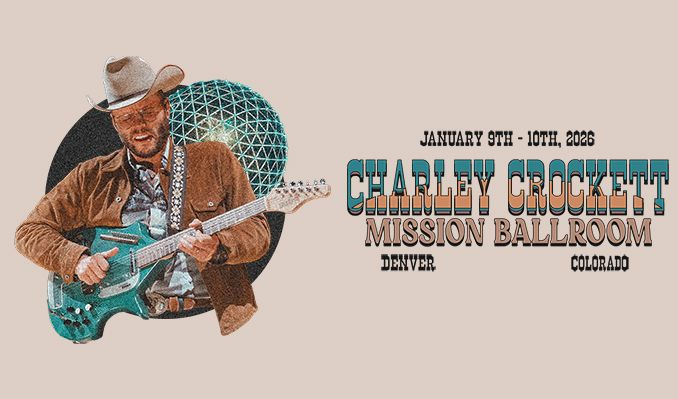
Charley Crockett featured in Cowboys and Indians

October 26th, 2025

sweet birthday gift, from a friend

October 26th, 2025

Support Family Farmers, Support Cotton and Union Workers

September 30th, 2025

www.FarmAid.org

All – Farm Aid Merchandise

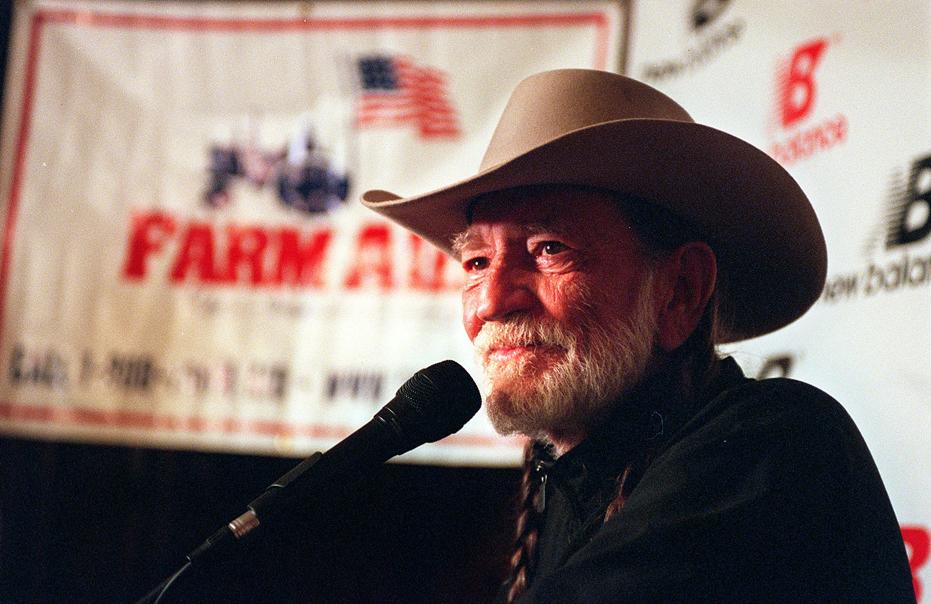
Farm Aid 2025 Press Conference

September 30th, 2025

Willie Nelson and Lukas Nelson, “Just Breathe”

September 30th, 2025

Photo:  Gary Miller

Willie Nelson and Lukas Nelson’s Farm Aid Duet of “Just Breathe” Steals the Show in Minneapolis

www.Americansongwriter
by:  Chris Piner

While most singers eventually walk off the stage one last time, for Willie Nelson, that time may never come. At 92 years old, the country legend showed no signs of slowing down. Since 2023, Willie has released two albums a year. In 2023, he recorded I Don’t Know a Thing About Love and Bluegrass. The next year, it was The Border and Last Leaf on the Tree. In 2025, he released Oh What a Beautiful World. Keeping with the same rhythm, in November, he will release Workin’ Man. And speaking of a working man, Willie recently teamed up with his son, Lukas Nelson, for an unforgettable duet of “Just Breathe.”

Much like his time in the studio, Willie continued to travel the country, sharing his love for music and storytelling. Headlining the 40th annual Farm Aid fundraiser, the icon stopped in Minneapolis, Minnesota, for a night full of singers like Neil Young, John Mellencamp, Dave Matthews, and even Bob Dylan. But when it came time for Lukas to take the stage, he stood by his father to cover one of Pearl Jam’s hit songs.

Willie Nelson’s Cover Of “Just Breathe” Labeled “Best Contribution To Music”

Originally released on Pearl Jam’s ninth studio album, Backspacer, “Just Breathe” landed No. 1 on the Canada Rock Charts. Eventually finding its way to the US, it hit No. 5 on the US Hot Rock & Alternative Songs. 

Besides the charts, “Just Breathe” caught the eye of Willie, who decided to cover it for his 2012 album, Heroes. And discussing the cover, Eddie Vedder compared listening to the rendition to “Smoking a great joint without all the coughing or the smoke.” He even considered it one of the “best contribution to music so far.” 

With fans loving the performance with both Willie and Lukas, “Just Breathe” became a heartfelt reminder of family, music, and timeless storytelling.

Farm Aid 2025 in Minneapolis

September 30th, 2025