When Willie Nelson performs in and around New York, he parks his bus in Weehawken, New Jersey. While the band sleeps at a hotel in midtown Manhattan, he stays on board, playing dominoes, napping. Nelson keeps musician’s hours. For exercise, he does sit-ups, arm rolls, and leg lifts. He jogs in place. “I’m in pretty good shape, physically, for ninety-two,” he told me recently. “Woke up again this morning, so that’s good.”
On September 12th, Nelson drove down to the Freedom Mortgage Pavilion, in Camden. His band, a four-piece, was dressed all in black; Nelson wore black boots, black jeans, and a Bobby Bare T-shirt. His hair, which is thicker and darker than it appears under stage lights, hung in two braids to his waist. A scrim masked the front of the stage, and he walked out unseen, holding a straw cowboy hat. Annie, his wife of thirty-four years, rubbed his back and shoulders. A few friends watched from the wings: members of Sheryl Crow’s band, which had opened for him, and John Doe, the old punk musician, who had flown in from Austin. (At the next show, in Holmdel, Bruce Springsteen showed up.) Out front, big screens played the video for Nelson’s 1986 single “Living in the Promiseland.”
“Promiseland” joined Nelson’s preshow in the spring, after ICE ramped up its raids on immigrants. The lyrics speak on behalf of newcomers: “Give us your tired and weak / And we will make them strong / Bring us your foreign songs / And we will sing along.” The video cuts between footage of Holocaust survivors arriving on Liberty ships and of Haitian migrants on wooden boats. In Camden—two nights after the assassination of Charlie Kirk, one night after the State Department warned immigrants against “praising” his murder, hours after bomb threats forced the temporary closure of seven historically Black colleges—the images hit hard. When the video ended, three things happened at once: stagehands yanked the scrim away, Nelson sang the first notes of “Whiskey River,” and a giant American flag unfurled behind him.
“Whiskey River” has been Nelson’s opener for decades. He tends to start it with a loud, ringing G chord, struck nine times, like a bell. On this night, he sat out the beginning and took the first solo instead, strumming forcefully, pushing the tempo. “I don’t know what I’m going to do when I pick up a guitar,” Nelson said. He plays to find out, discovering new ways into songs he’s been singing, in some cases, since he was a child. “Willie loves to play music more than anyone I’ve ever met,” the musician Norah Jones told me. “He can’t stop, and he shouldn’t.” For Nelson, music is medicine—he won’t do the lung exercises his doctors prescribe, but “singing for an hour is good for you,” he says. His daughter Amy put it more bluntly: “I think it’s literally keeping him alive.”
Last year, Nelson didn’t make it to every performance. On those nights, his older son, Lukas, filled in. At the end of the tour, no one knew if Nelson would go out again; five months later, he did. I started following him in February, in Florida. In Key West, Lukas and Annie flanked Nelson as he sat and rested before going on. Annie had her hand on the small of his back and Lukas on his shoulder; they looked like two cornermen coaxing a boxer back into the ring. Nelson suffers from emphysema. He barely survived COVID-19. (He got so sick he wanted to die; Annie told him if he did she would kill him.) His voice is still inky, he struggles for air, but he stays in charge, or lets go, as the moment requires.
“I’m definitely following Willie,” Nelson’s harmonica player, Mickey Raphael, told me. “He sets the tempo. He picks the songs.” Raphael is tall, with dark, curly hair and the easy swagger of a man who has spent his life onstage. When he started with Nelson, in 1973, there was no set list. Every night was “stream of consciousness,” catch-as-catch-can. Now, even with set lists taped to the carpet, Nelson might switch songs or skip ahead, lose his way, or drop verses—things he did as a younger man, too. At the end of a number that’s really careened, he’ll look over his shoulder and cross his arms in an umpire’s safe sign. “We made it,” he’s telling Raphael on these occasions. “We’re home.”
Nelson’s sense of home is elastic. For a long time, it was wherever work took him. In the fifties, when he was a young husband and father, in Texas, he washed dishes, trimmed trees, pumped gas, tooled saddles; he sold Bibles, Singer sewing machines, and Kirby vacuum cleaners door to door and drifted through a string of small-station radio jobs in Pleasanton, Denton, and Fort Worth. He was working as a d.j. at KVAN in Vancouver, Washington, when Mae Boren Axton, who co-wrote “Heartbreak Hotel,” came by the studio. Nelson played her a tape of his songs. She told him to seek his fortune in Nashville or back in Texas, where he ended up teaching guitar out of Mel Bay books, staying one lesson ahead of his students and writing extraordinary songs—“Crazy,” “Night Life,” “Funny How Time Slips Away”—that he offered to other artists for ten dollars apiece. Nelson’s oldest child, Lana, told me that when she found out he’d been peddling his songs she was crushed. “Nobody will ever know that you wrote them,” she said, “and how does that help?” “Look,” Nelson told her. “We got groceries.”
Larry Butler led the Sunset Playboys, a band at the Esquire Ballroom, in Houston. He told Nelson that his songs were worth a lot more, lent him fifty dollars, and hired him to play in the group. Others made similar offers—Nelson never forgot them—but there were songs, including “Night Life,” that he had to sell anyway. Twelve times a year, when the rent was due, the family moved. Lana said it never bothered her: “It’s not like you had developed this huge friendship with anybody over that thirty days.”
The idea of home comes up again and again in the songs Nelson wrote during this period, starting with “Misery Mansion,” recorded in 1960 as a rejoinder to “Heartbreak Hotel.” He followed that with “Where My House Lives,” “Lonely Little Mansion,” and “Home Motel”—a “crumbling last resort . . . on Lost Love Avenue.” In “Hello Walls,” Nelson pushes the metaphor to its limit, greeting not just the walls but the ceiling and the windows: “Is that a teardrop in the corner of your pane? / Now don’t you try to tell me that it’s rain.” The suffering in these songs is almost comical, but the hurt under the wordplay was real. Faron Young’s 1961 recording of “Hello Walls” became Nelson’s first No. 1 hit in Nashville, where he spent the sixties, until he finally grew to suspect that, for him, home might not be any one place at all.
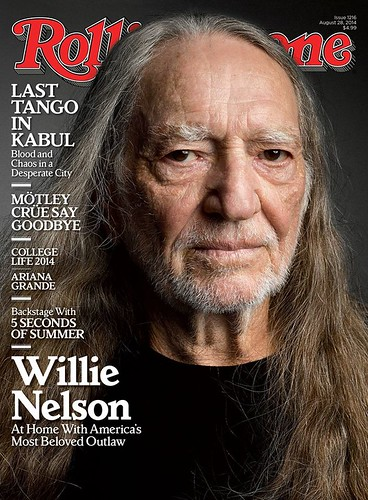
The Texas troubadour, who is having a moment at age 90, found success only after he decided to be fully himself, in his music and his look.
“Roll me up and smoke me when I die,” Willie Nelson sang from the stage of the Hollywood Bowl during his 90th birthday celebration in April.
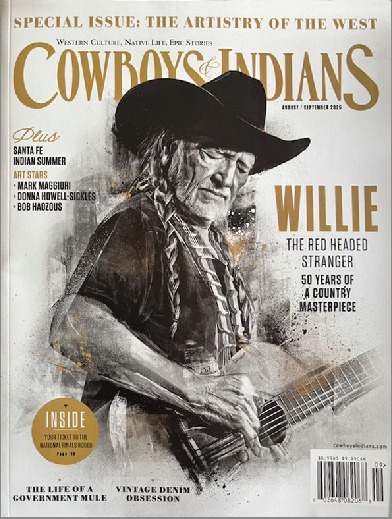
As usual, Mr. Nelson looked very much at ease. He was wearing a cowboy hat over a red bandanna, and his hair spilled down his back. His trusty guitar, a road-worn classical acoustic model named Trigger, hung from the red, white and blue strap around his neck. At his side was his longtime friend, the equally relaxed Snoop Dogg.
The duet with Snoop was one of many high points for Mr. Nelson in 2023, when fans and colleagues expressed their appreciation for one of the great survivors of American cultural life. In February, he won the Grammy for best country album. Two months later, he was joined by Beck, Rosanne Cash, the Chicks, Gary Clark Jr., Sheryl Crow, Keith Richards and other artists for the two-night Hollywood Bowl concert.
In November, shortly after his latest book, “Energy Follows Thought: The Stories Behind My Songs,” appeared in indie bookstores and Wal-Marts alike, Mr. Nelson was inducted into the Rock & Roll Hall of Fame. This month, CBS broadcast the Hollywood Bowl concert; and a four-part documentary retrospective, “Willie Nelson & Family,” started streaming on Paramount+.
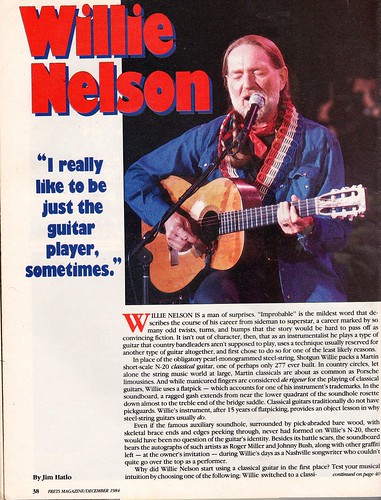
Willie Nelson is a man of surprises. “Improbable” is the mildest word that describes the course of his career from sideman to superstar, a career marked by so many odd twists, turns and bumps that the story would be hard to pass off a convincing fiction.
It isn’t out of character, then, that as an instrumentalist he plays a type of guitar that country bandleaders aren’t supposed to play, uses a technique usually reserved for another type of guitar altogether, and first chose to do so for one of the least likely reasons.
In place of the obligatory pear-monogrammed steel-string, Shotgun Wilie packs a Martin short-scale N-20 classical guitar, one of perhaps only 277 ever built. In country circles, let alone the string music world at large, Martin classicals are about as common as Porsche limosines.
And while manicured fingers are considered de rigeur for the playing of classical guitars, Willie uses a flatpick — which accounts for one of his intrument’s trademarks. In the soundboard, a ragged gash extends from near the lower quadrant of the soundhole rosette down almost to the treble end of the bridge saddle. Classical guitars traditionally do not have pickguards. Wille’s instrument, after 15 years of flatpicking, provides an object lesson in while steel-string guitars usually do.
Even if the famous auxiliary soundhole, surrounded by pick-abraded bare wood, with skeletal brace ends and edges peeking through, never had formed on Willie’s N-20, there would have been no question of the guitar’s identity. Besides its battle scars, the soundboard bears the autographs of such artists as Roger Miller and Johnny Bush, along with other graffiti left — at the owner’s invitation — during Willie’s days as a Nashville songwriter who couldn’t quite go over the top as a performer.
Why did Willie Nelson start using a classical guitar in the first place? Test your musical intuition by choosing one of the following: Willie switched to a classical guitar because he wanted to (a) favor a weak left hand by changing to the lower tension of nylon strings; (b) inject an element of mariachi music into his Texas-based country stylings; (c) get a guitar that was strikingly different from those of his performing peers; (d) sound like France’s Gypsy jazz guitar virtuoso, Django Reinhardt.
The correct answer is (d).
Any similarities between the style of Nelson and the style of Reinhardt are purely intentional. “I wanted to look for a guitar that I could use to find that tone that Django was getting,” Willie says, referring to the sound of Django’s unusual Selmer-Maccaferri steel-string acoustics. “The guitar that I am using now is the closest that I could find to that.”
Most guitarists would figure that Willie was drawn to a nylon-string instrument because of it’s comparatively easygoing action. But he says that in fact, the opposite is true.
“The action is really a lot slower than what you’d get on a regular Fender electric or something, which I used to play all the time,” he explains. “I played a lot of Fenders and a lot of Gibsons — all electrics. I really didn’t play the acoustic guitar on stage then, for the simple reason that the fingering was more difficult. But finally I sort of settled for the harder action to get the tone I wanted.”
As a performer, Willie also settled for harder action to get the kind of results he wanted. For years he channelled royalties from a successful songwriting career into a money-losing band, so that he could play his music the way he wanted with his “family” of loyal sidemen. He went against the Nashville grain in the early ’70s, switching to a non-country label, recording in New York, and moving his base of operations to Texas. That earned him the label “outlaw,” but it helped launch a new wave in country music that eventually overflowed into the rock and pop markets and carried Willie Nelson to megastar status. At present, his roll call of recording credits includes no less eight gold albums, six platinum albums, one double platinum album, and one triple platinum album.
Ironically — or perhaps, characteristically — the triple platinum album isn’t country at all. It is Stardust, Willie’s 1978 tribute to the standards (like “Stardust,” “Blue Skies,” “September Song,” and “All of Me”) that he heard and loved as a boy in the 1940s.
Born in the teeth of the Depression in April 1933, Willie grew up in Abbott, Texas, south of Fort Worth. His mother left home when eh was six months old, and he was raised by his grandparents. His grandfather, a blacksmith, gave Willie his first guitar lesson at age six. Willie’s grandmother, who wrote gospel songs, also played guitar. “I started out with a thumbpick,” Willie recalls, “Because that was what my grandparents used, so I was taught that way. But later on I began to hear players like Eldon Shamblin [of Bob Wills’ Texas Playboys], and they used a straight pick. So I changed because that music was more what I wanted to play. When I was a kid I used to play the mandolin — fool with it a lot, and the banjo, and everything that had strings o it. I usually could get some sort of sound out of them. But I never really tried to get good on anything other than a guitar.”
His older sister, Bobbie (now the pianist in Willie’s band), was taking piano lessons, so the sheet music she brought home supplemented the songs he heard on the radio — World War II pop hits like “Coming In On A Wing And A Prayer” and “Don’t Sit Under The Apple Tree (With Anyone Else But Me).” Through radio he also drank in Grand Ole Opry country music, western swing, and jazz. As he grew bigger, Willie earned $3 a day picking cotton with black field hands. What made the work bearable for him was the blues and work songs they sang.
At age 10 Willie made his professional debut, playing in a Bohemian polka band for $8 a night. He began working in a small group with Bobbie on piano, their father on fiddle, Bobbie’s husband on bass, and the local football coach on trumpet. Gradually he evolved a guitar style influenced by such players as Johnny Smith, Hank Garland, George Barnes, Barney Kessel and Django Reinhardt. “I liked those rhythms that Django’s band laid down, too,” says Willie, “the stuff his brother Joseph played on rhythm guitar.” Perennially electric, he also was drown to the music of flamenco guitarist Carlos Montoya. “The Spanish flavor was something I always enjoyed anyway,” he says, “So Montoya was one of my favorites from the beginning.”
After high school he served a short stint in the Air Force during the Korean War, then spent the ’50s working as a door-to-door salesman (variously selling vacuum cleaners, Bibles, and encyclopedias), a plumber’s helper, a used-car salesman, a janitor, a Sunday School teacher, and a disc jockey, all the while playing in bars and honky tonks. And writing music. One of his first successful songs was “Family Bible.” He sold the rights to it for $50, so he could buy groceries for his family. In 1959 he wrote his classic “Light Life,” which would eventually be recorded by more than 70 different artists and sell over 30 million copies. But two years later he sold the rights to it for $150, which he used to buy a second-hand Buick. He used the Buick to move to Nashville.
Willie’s work won quick recognition in Music City. Songwriter Hank Cochran heard Willie one night in Tootsie’s Orchid Lounge, the bar that served as the unofficial artists’ club room for the neighboring Grand Ole Opry, and signed him to a publishing contract. Singer Ray Price, who with Cochran was a part-owner in the publishing company, also was impressed. He made “Night Life’ his theme song, and hired its author as a bass player.
Soon vocalist Patsy Cline had a huge hit with Nelson’s “Crazy,” and Faron Young had another with Willie’s “Hello Walls.” Liberty signed Willie to a recording contract, and he scored his first Top Ten country hit in 1962 with the single “Touch Me.” He became a regular member of the Grand Ole Opry in 1964, and the following year he signed with RCA. But though he recorded more than a dozen albums for RCA between 1965 and 1971, Willie didn’t enjoy the kind of usccess that other artists were having with his material.
One reason was his phrasing. Intrigued by crooner Frank Sinatra’s knack for singing off, or against, the beat, Willie had adopted the technique in his own music. (That kind of phrasing often turns up in Willie’s guitar solos). But his producers saw Willie’s use of rhythmical license as a liability, not an asset — and often remixed his studio tapes to get his voice back on the beat.
The results weren’t impressive, commercially; and artistically they were frustrating for Willie. His substantial songwriting income allowed him to hold his road band together, however, and they kept the faith in live performances. “The music I played on a bandstand was better than the music I played in the studio,” he once told Al Reinert of New York Times Magazine. “For one thing, I’d be using my own band, and we’d have a better feel for it — be more relaxed. We’d have an audience to play for, and it was just a whole lot more fun.”
In 1969, in the middle of his second divorce, Willie’s Nashville house burned down. His guitar was one of the few things eh was able to save from the flames. While Willie’s home was being rebuilt, he moved back to Texas — and stayed. He made the relocation official in 1972. Meanwhile, Willie and his band began hitting the Southwest tour circuit again; and with the expiration of his RCA contract, he left the Nashville studios behind as well. In 1971 he signed with Atlantic, which was venturing into the country market. It was a good move for both parties.
Given a free hand, Wilie took his own band to New York to record Shotgun Willie. Finished in less than to days, the LP brought their “outlaw” sound out into the open. Within six months, sales of Shotgun Willie had surpassed the sales of all his Nashville albums combined.
From there, the successes began to snowball. Phases And Stages, completed in 1974 as Atlantic wound down its country operations, sold 400,000 copies. Meanwhile, the Nashville songwriting fraternity saluted his earlier contributions to country music by inducting him into the Nashville Songwriters Hall of Fame in 1973.
Willie formed his own record company, signed a distribution agreement with Columbia, and in 1975 released Red-Headed Stranger. From that came the single, “Blue Eyes Cryin’ In the Rain,” which gave him his first Top Ten country hit in 13 years and won him his first Grammy Awared. (It also documented a rare reversion to fingerstyle playing on the guitar solo. “I didn’t use a pick on that one,” Willie says. “Sometimes I use my thumb by itself, to get a softer sound. On ‘Blues yese,’ that was strictly thumb and fingers.”)
Red-Headed Stranger was certified gold in March 1976, and before the month was otu Willie shared in the plaudits as RCA’s The Outlaws — a compilation featuring the music of Willie, Waylon Jennings, Jessi Colter, and Tompall Glaser — also earned gold record status. Honors and hit records came almost predictably thereafter. Among his laurels to date are eight Country Music Association awards, including Best Album (twice), Best Single (twice), Best Vocal Duo (with Waylon Jennings in 1976, with Merle Haggard in 1983, and with Julio Iglesias in 1984), and Entertainer of the Year — a title conferred on him in 1979 by both the CMA and the Academy of Country Music.
Willie no longer has to worry about breaking even outside the studio. This summer, Willie Nelson & Family was No. 14 in Billboard Magazine’s list of top-grossing concert appearances (a roster on which the much-hyped Victory Tour by the Jacksons sewed up 6 of the top 12 spots). Willie also is listed as one of the top ten money-earners on the Las Vegas shworoom circuit (along with his old diol, Frank Sinatra).
But despite all the justifiable to-do about his gilt-edged performing status, Willie still prefers to think of himself first and foremost as a picker.
“What I always liked to do was be the guitar player,” he says. “Somewhere along the say, I started being the singer. I’m not sure how that happened. I think one night the front man didn’t show up, and I wound up fronting the band and doing the singing. And I don’t know if that was really the best day of my life! I really do like to be just the guitar player, sometimes. It’s very enjoyable when the only responsibility you have is playing the guitar.
Fret Magazine. When you are playing lead, what’s gong on in your mind? Are you thinking of right chord changes or melodic patterns on the fretboard, or modes related to the key of the tune, or positions you like to work from?
Willie Nelson. Not consciously. I think probably if somebody put a computer on me, they’d find I use a lot of things the same way. But consciously — I just play off the top of my head. On the songs that I do a lot, I guess I’m subconsciously aware of the chord structures and I just play whatever notes I hear that fall within those. I really don’t think about all that. I guess I’m playing from somewhere else.
Fret: Do you work out solos ahead of time? Often, when you’re fronting your band, your solos will restate the melody. But in some situations — on the Angel Eyes album, for example — you’ll take what sounds like a more spontaneous lead break.
WN: It’s all how I feel at the moment. I really am not confined to playing anything the same way. I don’t have any arrangements that I try to follow, other than the basic things that are always there in a tune — the stuff that you can’t get around. Whenever anyone in the band takes choruses, they just play what they want to play.
Fret: Back on 1976, when you were interviewed by our sister magazine Guitar Player, you said that in doing solos you didn’t get into a lot of minor scales, because you felt you were major-chord oriented. How that youre’ playing things closer to mainstream jazz, is that still true?
WN: I think so. I love minor chords, and I have written some songs with minors in them. But basically, the songs that I listened to and learned in the beginning were major-chord songs.
Fret: Is that when you developed yoru feeling for standares like “Stardust”? Would it be fair to say that your growing up with that kind of material helped you learn how to put together well-crafted melodies?
WN: I think it very well could have. I was always exposed to those songs through the radio and through music that came into the house — sheet music, and so forth. I love good melodies, so I’m sure that had a lot of influence on me.
Fret. Through albums like Stardust and Angel Eyes, you’ve probably influenced a lot of younger musicians yourself, giving them their first exposure to standards and jazz. Do you have any other styles of music up your sleeve — material you might record in the future?
WN: There are some of the older styles I still ahven’t done, like Stephen Foster songs and old Songs of the Pioneers things — the real cowboy songs like “Leaning On The Old Top Rail” and “Empty Cot In The Bunkhouse Tonight.” All of those classics are still tehre to do.
Fret: Often you’re functioning as a rhythm player. In your opinion, what goes into really playing rhythm as well as it can be played?
WN: I think you ahve to know the chord forms. I think guys like Paul Buskirk and Homer Haynes are two of my favorites because of their styles. [Ed note: Mandolinist Paul Buskirk and guitarist Henry “Homer” Haynes (half of the team of Homer & Jethro) had strong elements of swing in their music.] It’s 4/4 rhythm and it’s done without drums. Or it can be done with drums; but I really liket he sound of the kind of rhythm section where you just hvae an upright bass and the rhythm guitar.
Fret: Does a rhythm guitarist need a special sensitivity to where the lead player is going?
WN: Yes, I think that’s an innate thing that most good rhythm guitarists know, becasue most rhythm guitar players are also leadguitar players, to a certain degree. So you just have t have a feel of when to play and when not to play, or hwo loud to play.
Fret: When you’re chording, do you ever use your thumb to fret notes?
WN: Yeah, a lot of times. I do that especially in open-chord rhythms. For instance, on a first position D chord I’ll use the thumb on the low E string to play an F#.
Fret: You generally use Fender medium flatpicks on your nylon-string guitar, instead of fingerpicking it. How often do you change picks? Some steel-string players have told us they go through a half-dozen a night, because the picks get worn and start sounding scratchy. But it would seem that nylon strings would be easier on a flatpick.
WN: I guess a normal person probably would be able to make them last longer, but there’s one tune we do each night — “Bloody Mary Morning” — where I’ll go through a pick every time I play it.
Fret: You can hear the difference? The pick starts to sound rough?
WN: No — I just break it.
Fret: Do you play with the point of the pick, or do you turn it and use the rounded corner for a mellower sound, as some players do?
WN: I try to keep it on the point, but in the course of “Bloody Mary Morning” I play every side of it. I think! I use up a couple of picks a night, because “Bloody Mary Morning” will take care of one, and “Whiskey River” will eat up another, so I’ll go through at least two picks, maybe three, every show.
Fret: You used to use ball-end La Bella nylon strings. Are you still staying that that brand?
WN: As far as I know, I am. The strings are automatically changed on my guitar every few days by a guy in our crew, and I’n not sure if he is still using La Bellas or not. I can’t tell any difference.
Fret: Are the strings changed on a regular schedule, or does the frequency just depend on how often you are performing?
WN: I think probably every three or four days he’ll change the strings. And we keep another guitar handy, with the strings on it already stretched, so that we kind of rotate them. When you put new nylon strings on a guitar, you’re always retuning them as they stretch out. That happened to me a lot of times on stage. Boy, it was hard, especially under those hot lights. Finally, we got real brilliant here and figured out that if you stretch them a few days before you put them on, you wouldn’t have to do that. I don’t know why we didn’t think of it years before, but better late than never!
Fret: Are there certain strings you’re more likely to break than others? Some players find that the G string is the first to go, for example.
WN: I very rarely break strings. In fact, I don’t remember the last string I broke. The picks go before the strings do, because the nylon strings are more flexible.
Fret: The nylon strings are one of the things that set your sound apart; but the way you amplify your guitar has a lot to do with that, too, doesn’t it?
WN: I think so. It’s a Baldwin amp with a Martin classical guitar — which is kind of a bastard situation. I’ve tried other combinations, and I don’t get the same sound that I do with this one, which was really accidental.
Fret: Didn’t the pickup itself come from a Baldwin guitar that got broken?
WN: Yeah, I had it taken out of the Baldwin and put in this one years ago, by Shot Jackson’s place in Nashville [Ed note: In the late ’60s, after Baldwin acquired Gretsch and began marketing a line of guitar amplifiers, the company briefly offered a classical guitar model with a ceramic piezo-electric pick up, and a companion amplifier designed for a “natural” tone response.] I’ve never changed it. I’ve tried to keep everything exactly the same, and the amplifier is still the same one. They don’t make Baldwins any more, you know. Each time I come across a used Baldwin amp, I try to buy it so I can use the parts for replacements on this one. I’ve got a couple of them.
Fret: Youv’e had a lot of work done on your guitar to keep it in service through all yoru years of touring. Who handles the repairs?
WN: A guy named Newman, in Austin [Newman Guitars, 200 Academy, Austin, Texas]. He has a guitar shop in the Opera House in Austin, and he’s been fixing my guitar for years.
Fret: Does your road crew take special precautions with the guitar and amp, since those are really one-of-a-kind items?
WN: They have nice sturdy cases for both. Steel cases. They take real good care of them.
Fret: Do you carry any other acoustic guitars on the road with you, or keep some at home that you just use for recording?
WN: I have a couple of guitars around the house, and sometimes I have one on the bus just to fool around with, but my stage guitar is my main guitar. The others are a variety of things — just whatever is available. It varies from one day to the next, really.
Fret: How many days a year are you on the road?
WN: I think probably somewhere between 200 and 250. That’s this year. It’s been like that practically every year, and each year I say, “Next year I’m going to slow down.’ But I still like doing it. I just enjoy playing music a lot.
t age 90 and with more than seven decades of music under his belt, Texas native Willie Nelson is busier than ever. The 12-time Grammy winner was recently inducted into the Rock n’ Roll Hall of Fame on Nov. 3 and in September, he released Bluegrass, his first full-length album of bluegrass-styled music. The album has earned Nelson a Grammy nomination for best bluegrass album, leading into the 2024 ceremony.
On Dec. 17, CBS will present the music special Willie Nelson’s 90th Birthday Celebration, honoring the music icon with performances and collaborations from Nelson as well as Gary Clark Jr., Snoop Dogg, Miranda Lambert, Norah Jones, George Strait, Chris Stapleton, Keith Richards and Nelson’s sons Lukas Nelson and Micah Nelson. More top-tier stars will host, including Jennifer Garner, Chelsea Handler, Woody Harrelson, Ethan Hawke, Helen Mirren and Owen Wilson.
Nelson’s innovative songs, unique performance style and jazz-inspired, behind-the-beat style of phrasing, has made the iconoclast one of music’s most widely beloved artists, with 20 No. 1 hits on Billboard’s Hot Country Songs chart. His catalog of hits he penned for other artists includes “Night Life,” “Hello Walls,” “Crazy,” “Family Bible” and “Funny How Time Slips Away.” He earned his first top 10 country hits as an artist in the 1960s with “Touch Me” and “Willingly,” but it was 1975’s Red Headed Stranger that would garner Nelson his mainstream breakthrough. The album’s “Blue Eyes Crying in the Rain” would earn Nelson his first Grammy award, and his first No. 1 hit on the Hot Country Songs chart.
In 1976, Nelson’s music was part of the compilation album Wanted! The Outlaws, which also included Tompall Glaser, Waylon Jennings, and Jessi Colter; the album became country music’s first album to be certified platinum by the Recording Industry Association of America. Nelson and Jennings’ hit collaborations include the 1976, three-week Hot Country Songs chart No. 1 hit “Good Hearted Woman” and 1978’s four-week No. 1 “Mammas Don’t Let Your Babies Grow Up to Be Cowboys.”
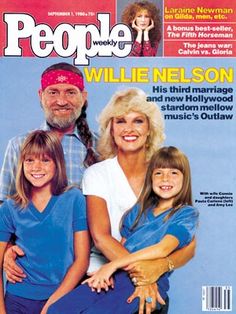
People Magazine
September 1, 1980
by Cheryl McCall
Before he ever imagined the high life, the whiskey nights and the Bloody Mary mornings to follow, Willie Nelson yearned for the road and its promise of freedom. As a Texas school boy, chopping cotton for $1.5o a day, he listened to the gospel songs of the field hands and daydreamed about moving on. “I didn’t like picking cotton one bit,” he recalls. “I used to stand in the fields and watch the cars go by and think, ‘I want to go with them.’”
Today, nearly four decades and a million miles later, Willie, 47, continues to heed the call of the highway. Overtaken by success a mere five years ago with the release of his album Red Headed Stranger, he simply picked up the tempo and put his foot to the floor. Once branded an outlaw by Nashville’s rhinestone-encrusted music establishment, Nelson has lately become an inadvertent and unassailable national monument. No one really objected when Willie dropped a lyric from The Star-Spangled Banner at the recent Democratic National Conveniton.
Since Stranger went platinum in 1976, Nelson has added two more platinums, two double platinums, four golds and a whole atticfull of Grammys and Country Music Association awards. Currently, with seven LPs on the charts plus his new double LP Honeysuckle Rose, Willie has taken his guitar and his low-key persona and is trying his hand at being a movie star.
As he tells it, his starring role as Buck Bonham in Honeysuckle Rose is one he could play almost from memory. “I never did know you had to the trained to have your picture made,” drawls Willie. “Maybe that’s the whole point — not knowing anything is maybe better than just knowing a little. Besides, I can sympathize with Buck,” he adds. “He’s a married guy who succumbs to temptation on a potholed highway. I’ve been that route myself.”
It shows. On-screen, Willie projects the same earthy sex appeal and relaxed masculinity that give his life performances tension. His face is as brown and creased as a walnut, the reddish hair and beard dusted with gray. But the camera dimisses the etchings of age and lingers instead on the soulful brown eyes and the effortless smile. When Nelson is teamed with Dyan Cannon, who plays his lusty wife, Viv, in Honeysucke Rose, the movie crackles with high voltage. “Willie does it like a real person, which is what an actor is supposed to do,” says the film’s director, Jerry Schatzberg. “He’s very natural in the love scenes because he’s had a lot of experience there. The man’s been married three times and he knows what he’s doing.”
While Honeysuckle Rose borrows freely from the singer’s nomadic, loosely plotted existence, the unabridged script of Willie’s life story is part Grapes of Wrath, part contrified Battle of the Sexes. Children of the Depression, Willie and his older sister, Bobbie, were raised by their paternal grandparents in dusty little Abbott, Texas after Ira and Myrle Nelson divorced. While Bobbie learned piano from her grandmoteher, Willie was given his first guitar at 7 by his grandfather, a blacksmith who took mail-order music lessons. When the old man died the following year, Willie kept his ear to the family’s wooden Philco radio, learning as many Grand Ole Opry songs as he could. “He’d pick up things just like that,” says Bobbie. “His ear is so fantastic, he doesn’t even know how good he is.”
Graduating from high school at 16, Willie left the cotton fields for a job as a disc jockey. “When I found myself singing over the radio, I didn’t think life got much better than that,” he recalls. For a while it didn’t. He joined the Air Force in 1950, but was discharged with a back injury. Afterward he enrolled at Baylor University, but spent most of his single semester there playing dominos. Dropping out, he was earning as little as 50 cents a night with a local band when he met and married Martha Matthews, a 16-year-old Waco carhop, in 1952. “She was a full-blooded Cherokee.” Willie recalls, “and every night with us was like Custer’s last stand. We’d live in one place a month then pack up and move when the rent would come due.” By 1958 Willie had three children to support. He made ends meet, after his fashion, as a plumber’s helper and a door-to-door salesman, while working nights playing his songs in the honky-tonks.
The Nelsons drifted to Nashville in 1960, about the time their stormy marriage was nearing its end. Martha resorted to bartending, while Willie hawked his satchel of songs on Music Row and drank up the profits at Tootsie’s Orchard Lounge. In what turned out to be her final gesture of compassion, Martha had to rescue Willie from a drunken suicide attempt when he sprawled in the street outside Tootsie’s and waited for a car to run him over. The last night of their marriage was even more garish. “I came home drunk,” Willie remembers, “and while I was passed out, she sewed me up in a sheet. Must’ve taken her two hours. Then she got a broomstick and started beating the hell out of me. I woke up in this strait jacket, getting pounded like a short-order steak,” he continues. “By the time I got loose, she’d lit out in the car with the kids, her clothes and my clothes. There was no way I could follow her naked, and that was kind of the end of it.”
That was about the time his intensely personal, offbeat laments began turning into hits for better-known singers. Night Life (which Willie had sold for $150), Crazy, Hello Walls and Funny How Time Slips Away all cracked the country Top 20 by 1963, and soon he was earning $600 a week in composer royalties. (His own renditions weren’t selling then, because producers kept smothering his reedy baritone in syrupy strings.) Over the years Nelson has composed more than 1,000 songs, while successfully avoiding the old Nashville formulas. “I’d say that 99 percent of what I write has come from my own experience,” he says. “A person could probably start from my first song and go all the way to my last and — if he knew what to look for — write my autobiography.”
Several painful chapters were inspired by his second marriage, to country singer Shirley Collie. Husband and wife sang, recorded and traveled together until settling down on 200 acres near Nashville in 1964. There Willie blew a small fortune fattening hogs (“I bought them for 25 cents a pound and ended up selling for 17”) while performing at the Grand Ole Opry. When Willie hit the road again to recoup his losses, he left Shirley at home to take care of his kids. Both drifted into smashing up cars, drinking, drugs and infidelity until the marriage simply died of neglect.
Still, Willie wasn’t destined for bachelorhood. Even before the divorce from Shirley was final, he had gone ahead and married his present wife, Connie Koepke Nelson, 36, a factory worker whom he’d spotted during a club date in Cut and Shoot, Texas. “When Willie came out to sing,” she remembers, “he looked down and smiled. It wasn’t a flirty look, just a warm, neat feeling. Before the night was over he asked for my phone number, and the next time he came through Houston he called. I went to the show and that was it.”
By 1970 Shirley had moved out and Connie had moved in, but Willie’s career was going nowhere in Nashville. Then his house caught fire. “By the time I got there, it was burning real good,” Willie remembers, “but I had this pound of Colombian grass inside. I wasn’t being brave running in there to get my dope — I was trying to keep the fireman from finding it and turning me over to the police.” Willie saved the grass, but lost more than 100 tapes of songs he hadn’t yet recorded. Still, out of the ashes came a sense of relief and a determination to abandon Nashville for Texas. Installing his family in Austin, Willie bought a used Greyhound bus and began touring the county fairs, dance halls and violence-prone bars where he was known and loved.
Just as Merle Haggard was topping the charts with his hippie-baiting Okie from Muscogee, Willie — never a slave to fashion — began sporting long hair, a beard and and earring. With fellow outlaws like Waylon Jennings, Kris Kristofferson and Jerry Jeff Walker, he began forging the gritty Austin sound that finally brought him success as a singer. Within six months of its release in 1973, the LP Shotgun Willie outsold all his previous albums combined; he was inducted int Nashville’s Songwriters’ Hall of Fame; and his first Fourth of July picnic draws 50,000 rockers and rednecks to the little hamlet of Dripping Springs, Texas. Creative control over his recordings brought Willie a string of hit LPs that hasn’t been broken, and later led to his first movie role — as Robert Redford’s manager in The Electric Horseman. Five more film commitments await, at a reported $1 million per roll, but Willie insists he’s not going Hollywood. “I like making movies,” he said, “But it’s confining, and I don’t like to go too long without playing concerts.”
Willie and his extended family of 25 musicians and roadies average 250 days a year on tour, traveling in a convoy of three customized buses and two semis of sound gear. Though he could comfortably afford to fly to his concerts, the bus is a kind of spiritual haven. “I rest better because there’s no phone,” he explains, “and traveling is a big part of my life. I haven’t seen much of the country, but I’ve been all over it a thousand times, just laying in the back with the blinds drawn. I guess it’s the perpetual motion I like.”
Backed by what may be the highest paid band in country music (members earn $750 a night — $1,000 for cutting an album), Willie’s roistering performances always start on time and usually run through 54 songs. Then he shrugs off his battered Martin guitar to sign autographs for perhaps another two hours. Whether he’s playing Caesars Palace (where he’s paid $1.5 million a year) or a little Bible Belt fair, Willie’s accessibility is his immutable trademark. “He just can’t say no to anybody,” Connie says. “I’ve seen Will so tired he can’t go any further. Then someone will ask one more thing from him and he’ll do it. He doesn’t ever want anybody to think that success has changed him.”
In some ways, of course, Willie has changed. Though he and his sidemen continue to graze on $3, 500-a-pound Arkansas grass (“Most people smoke to get high,” says a friend. “Willie smokes to get normal”), he has sworn off pills and cut back on his whiskey. He offers no apologies for the marijuana (“I think most sensible human beings know it’s not something you send people to the penitentiary for”) but forbids the use of any other drugs — especially cocaine — by his band. “If you’re wired,” he says simply, “you’re fired.”
Despite his new found willingness to set commonsense limits, Willie’s most powerful addiction is to life on the road. “It’s been a strain on Willie and me to an extent, but we’ve never had trouble between us, ever,” reports Connie. “I don’t worry about the women. I trust Willie completely. But sometimes I feel that he doesn’t need me. He’s got the road and he’s got his life. It’s real easy to feel pushed aside.” This summer Connie and the kids have been touring with Willie — a visible rebuttal to stories linking Willie with actress Amy Irving, his adulterous interest in Honeysuckle Rose. “Amy and I were friends during the movie and I hope we’re still friends.” says Willie. “Anything more is only what people wanted to write about.”
There was a time when Willie’s definition of a successful performer was “anyone who got to play music and eat.” Today he says, “I have all the material things I need and a couple I don’t.” When their life in Austin became oppressively public, he, Connie and their two children moved to Colorado in 1977. There Willie can hang his hat in a three-story chalet on 60 acres near Denver or at the family’s 64-acre Pedernales Country Club outside Austin, an 80-unit apartment complex, the 1,700-seat Austin Opry House and the previous Nelson residence — a 44-acre spread with $750,000 limestone ranch house hidden behind a wall topped with electrified barbed wire. Around Nashville, his holdings include a music publishing company and 200 acres outside town.
Inevitably, becoming a man of property, as well as the father of five, grandfather of six and paterfamilias to a musical entourage, has given Willie a sense of responsibility that is occasionally burdensome. “I’m not worried about the next car payment,” he says, “But I am worried about income taxes. A lot of families (including numerous ex-in-laws) depend on me, and it’s a lot of pressure in some ways. But we’re making more now than we ever did, so at least if I decide to hang it up for a couple of months, nobody’s going to starve to death.” Shouldn’t his success entitle him to be a little more sanguine? “Maybe,” he says. “But I still get knocked off my feet like anybody else. I’ve had so many ups and down in the last 30 years that I’ve learned to live with both. The successes are great, but they’re not going to last forever. And I’ve come back from a lot of failures.”
Earlier this year legendary musician, songwriter and recording artist Willie Nelson announced his 151st studio album would be a return to bluegrass, this time reimagining 12 of his own originals with a string band lineup. Available September 15 and simply titled Bluegrass, the Buddy Cannon-produced project reinforces the career-long relationship Nelson has had with bluegrass and bluegrass pickers, calling on old friends and collaborators like Barry Bales, Ron Block and Dan Tyminski, as well as band members and vocalists Aubrey Haynie, Rob Ickes, Josh Martin, Mickey Raphael, Seth Taylor, Bobby Terry, Wyatt Beard and Melonie Cannon.
Ray Benson on Bob Wills, Cindy Walker, and Willie Nelson’s Version of “Going Away Party
The Grammy-winning founder of Asleep at the Wheel on fifty years of friendship with Willie, with cameos by George Gershwin, Floyd Tillman, and Robert Duvall.
Ray Benson was the gangly leader of an unlikely band of long-haired, western swing revivalists based, of all places, in the California Bay Area when he met Willie Nelson in the early seventies. In those years, big band country-jazz fusion was an all-but-forgotten style to much of America, though not to Willie.
Like Benson, he’d grown up idolizing and emulating the sound’s founding father, Bob Wills, albeit twenty years earlier, in the thirties and forties. The two true believers quickly bonded, and in 1973, Willie advised Benson that his band, Asleep at the Wheel, could find a larger, more reliable audience if it moved to Austin, backing up his suggestion with a promise of show-opening slots at his own gigs. Soon thereafter, Benson and the Wheel made the move, kicking off fifty years of tight friendship and wildly productive musical collaboration.
On this week’s One by Willie, Benson focuses on one of his and Willie’s finest moments together, a cover of the 1974 Wills classic, “Goin’ Away Party.” Willie and Benson’s version was the closing track on the Wheel’s Grammy-winning 1999 album, Ride With Bob: A Tribute to Bob Wills and the Texas Playboys, and after describing how they came to record it, Benson goes on to detail the even more impressive backstory to the song. It was written for Wills by the great Cindy Walker, the country songwriter from Mexia who composed dozens of the swing and singing-cowboy songs that Willie grew up on. With well-considered and experienced authority, Benson calls Walker one of the single greatest influences on Willie’s own creations.
We’ve created an Apple Music playlist for this series that we’ll add to with each episode we publish. And if you like the show, please subscribe and drop us a rating on Apple Podcasts or wherever you get your podcasts.
As the man who wrote “Up Against the Wall, Redneck Mother,” Ray Wylie Hubbard—one of the founding fathers of Americana music—knows a little bit about anthems. On this episode of One by Willie, Hubbard focuses on a Willie song that rose to that lofty status long ago, Nelson’s erstwhile show opener “Whiskey River.” It’s one of those songs that even casual fans recognize the instant they hear its opening guitar lick, and Hubbard describes how Willie took it from the original, hard-core country shuffle released in 1972 by its composer, Johnny Bush; filtered it through what Hubbard calls Willie’s “jazz, jam-band mind”; and turned it into what many consider the national anthem of Texas.
Willie Nelson doesn’t schedule interviews. Nowadays, his publicist rings him up, and when the country legend happens to pick up—which, judging by our multiple failed attempts to get him on the line, is a rare occurrence—he’s informed there’s a reporter on the other line. Would he like to chat, perhaps? He almost never says no. So on the first call that Nelson answers—our fourth attempt overall—we’re on the line with the man known as the Red Headed Stranger.
At seventy-eight, Willie Nelson is a relic. But he doesn’t see it that way, because the country star has managed to stay as busy as ever. He’s usually touring. When he’s not, Nelson is either at his Austin, Texas ranch or at his home in Maui. Time away, however, doesn’t often suit Willie well. He likes to work. And after all, how fun could resting on your laurels be when you’ve has sold upwards of 50 million albums?
Nelson is most excited about his latest endeavor, Heroes (due May 15), a full-length album he recorded last year with family and close friends, including Snoop Dogg, Kris Kristofferson, and Jamey Johnson. Heroes is not your average Willie Nelson post-millennial release—the man, in addition to a trio of new originals, covers Coldplay and Pearl Jam. Nelson was in Mississippi when he hopped on the line with GQ, and talked about his new album, enjoying Amsterdam with his pal Snoop Dogg, and how he’s smoking as much pot as ever.
GQ: Thanks for hopping on the phone, Willie! Willie Nelson: Sure!
GQ: Heroes was a family affair. Your sons, Lukas and Micah, share writing credits on the album.
Willie Nelson: It was, and is always nice to work with the kids. But I also had a lot (of others): Kris (Kristofferson) and Jamey (Johnson) and Snoop and Sheryl Crow and a bunch of other great talent in there. (Billie) Joe Shaver. Ray Price. So a lot of my friends were in there.
GQ: Speaking of Snoop, I hear you shared some time together in Amsterdam.
Willie Nelson: Yah. I was in Amsterdam and I got a call from Snoop and he was, I think, in New York or somewhere and didn’t have anything to do. So he just flew over and we hung out for a few days.
GQ: I assume you two frequented a few of Amsterdam’s famous coffee shops?
Willie Nelson: We had a cup of coffee or two [laughs]. We got to be good buddies.
GQ: I know you are also longtime buddies with fellow country icon Billy Joe Shaver, who also appears on the album.
Willie Nelson: Heck, yah! In fact the song, “Heroes”, I wrote that song about Billy Joe, really. We stay in touch. We text back and forth all the time.
GQ: And Kris Kristofferson, another longtime friend of yours, also makes an appearance.
Willie Nelson: We’re big friends. I saw him a little while ago. I was in Maui and he lives over there also sometimes. He’d come by. We hung out a little bit. Another time before, that he brought Muhammad Ali by.
GQ: Kristofferson and Ali. Quite the combination.
Willie Nelson: [Ali]’s an incredible guy. One time I think we were playing in Kentucky or something and he’d come by and say hello. And I brought him on the bus and we hung out a little bit. And I’ve got a punching bag in the back so I got him back there punching the bag.
GQ: You have some surprising covers on Heroes—your cover of Coldplay’s “The Scientist” in particular.
Willie Nelson: It was for a [Chipotle] commercial first and it was pretty well received, so we decided to put it out on the new album.
GQ: And Pearl Jam’s “Just Breathe”? Can’t say I saw that coming.
Willie Nelson: My son Lukas knew that song and he brought it to the studio. And that’s really how that happened. He brought about half the songs to the studio.
GQ: Is that a different process than normal? Do you usually come up with the track list yourself?
Willie Nelson: [It happens] all kind of different ways. On this particular one, Luke came up with the song and naturally I liked the song. But I wasn’t familiar with it until we recorded it.
GQ: It’s interesting because “Just Breathe” sounds like it could have been one of your originals. Willie Nelson: Aw, thanks!
GQ: I know you have a home in Hawaii. Have you been spending a good deal of time down there lately?
Willie Nelson: I just spent a couple weeks over there and we’re back traveling now. I’m in Mississippi tonight and then Illinois. I just enjoy both working and not working. And fortunately I work enough where I get that out of my system and then we take a few days off, take a rest. It’s working pretty good. We work a couple weeks and then we take a couple off.
GQ: What does Willie Nelson do in his downtime? Are his off-duty activities a bit different than in, say, 1975?
Willie Nelson: Oh, it’s the same stuff I was doing in ’75! I don’t notice any changes. I went for a bike ride a while ago, a little run. The weather’s nice here so I can get out. So I’m just doing whatever I can do. And when I’m off I’m either playing some golf or some poker or whatever comes up.
GQ: What motivates you to get up each morning and keep playing and writing music?
Willie Nelson: New music keeps coming along and every now and then I write some new things—there’s “Hero,” “Roll Me Up,” and “Come On Back Jesus” on the new album. Then I go back and do something in the show that we hadn’t done in maybe a long, long time. Like last night I did “I Guess I’ve Come to Live Here in Your Eyes”. And I recorded that twenty, thirty years ago. [Editor’s Note: Nelson recorded this track in 1996] Every now and then I’ll think of something to put back in the show. I just kind of play it off the top of my head. If I do it that way it keeps it kinda fresh.
GQ: People love to mythologize your marijuana intake. Is your current pot consumption level exaggerated?
Willie Nelson: No, I still probably smoke as much as I ever did! I use a few different methods now. I don’t smoke as many joints as I used to. I use vaporizers a lot. It cuts down on the heat and the smoke. And for a singer that’s not a bad idea.
GQ: I must ask. How’s your famous acoustic guitar, Trigger? She still receiving the finest of care?
Willie Nelson: Trigger’s doing great! Trigger’s probably in better shape than I am.