John Mellencamp, one of Willie’s fellow Rock and Roll Hall of Fame members and a Farm Aid co-founder, has been a fan since first hearing “Funny How Time Slips Away” as a pre-teen in Seymour, Indiana. That song was one of Willie’s first contributions to the American Songbook, a reliable hit for other artists for nearly 15 years before Willie finally became a star, and it gets Mellencamp musing on parallels between early Willie and Bob Dylan—and how he later followed Willie’s lead in his own bitter battles with record industry overlords. From there we get into the unlikely origin of Farm Aid, the ongoing fight for the American farmer, and why Mellencamp thinks Willie deserves the Nobel Peace Prize.
Episode 9 of “One by Willie” is out now. This week’s guest? Willie’s daughter, Lana Nelson.The unofficial family historian talks about listening to her dad sing “Red Headed Stranger” back before he’d ever even made it to Nashville.
To many Willie fans, both the casual and hardcore, his 1978 album Stardust is the best he ever made, and the reverence is well-earned. It’s the biggest-selling record of his career, spending a full ten years on Billboard’s country albums chart. It’s also an undeniably beautiful collection of songs and performances, quiet and contemplative and marked by Willie’s unmistakable affection for the music and his band. Simply put, it’s a perfect record. For all those reasons, it’s easy to forget that Stardust was the most radical move he ever made.
Think back to the year it came out. On the strength of such albums as Red Headed Stranger, Wanted! The Outlaws, and Waylon and Willie, Willie was at the forefront of the outlaw country revolution, and that’s what his label, Columbia Records, wanted to sell more of. But Willie had his own idea. He wanted to record a collection of standards from the American Songbook, and he planned to do so with R&B legend Booker T. Jones, one-time leader of the house band at Stax Records, adding in his Hammond B-3 organ and producing. Oh, and Willie saw no need to record it in a proper studio. He believed these songs he’d grown up loving as a kid would be better served by a more intimate setting; he didn’t want to capture them, he wanted to caress them. Thus was born Stardust.
This week’s OBW: Legendary Muscle Shoals bassist David Hood talks about backing Willie on what Texas Monthly ranked his greatest album, “Phases and Stages”, getting into who Jerry Wexler was, why Wexler hooked Willie up w/the Swampers, and the weird moment when Willie first walked in the studio.
Oh and we also listen to a bootleg of the alternate, “more commercial” mix of Phases cut in Nashville.
Spoiler alert: Thank god Wexler released the Swampers’ version.
Rodney Crowell is one of the rare singer-songwriters to have kept one foot in the coffeehouses while placing the other squarely at the top of the charts as an artist. He’s a Houston-born troubadour who had a literal seat at the table when Guy Clark and Townes Van Zandt revolutionized country songwriting in the early seventies (see James Szalapski’s landmark music documentary, Heartworn Highways). But he also happens to have been the first act ever to earn five number-one country singles off of one album, 1988’s Diamonds & Dirt.
On this week’s One by Willie, Crowell dissects Willie’s rip-roaring meditation on self-medication, “Bloody Mary Morning.” It’s a song that barely dented the country top twenty when it was released as a single in 1974, but as the lead track on side two of that year’s Phases and Stages—the album many Willie fans argue is his best—it went on to become a showstopper in his live sets and an all-time country classic. And it prompts thoughts from Crowell on nasty hangovers, going to Willie shows as a high-school kid in the mid-sixties, and that time in the late seventies when he showed up for his first recording session with Willie in Bogalusa, Louisiana . . . only to discover a red Camaro doing doughnuts in a field next to the studio. And you will not guess who was driving.
Willie’s daughter Amy Nelson was just five years old when she first heard Kermit the Frog sing “Rainbow Connection” in 1979’s The Muppet Movie, and she fell for it instantly. But unlike other of her childhood fascinations, her love for the song never waned, and she spent the next twenty years trying to talk her dad into recording it.
On this episode of One by Willie, Amy describes finally getting Willie to cut “Rainbow Connection” in 2001, and talks about the eponymous album that grew from that session. She describes the project as a magical, extended-family affair, recorded at the small studio in Luck, with a backing band of Willie’s nearest and dearest and Amy as coproducer.
Fleshed out with playground favorites and songs Willie used to pick and sing for his kids at bedtime—folk song “Old Blue” was one of the latter—the record was envisioned as his first children’s album. But, Willie being Willie, he ended up tacking some more grown-up songs onto the end of the record, which went on to earn a 2002 Grammy nomination for country album of the year. Amy discusses all that, plus her own decidedly grown-up songs as one half of the acoustic folk duo Folk Uke.
We’ve created an Apple Music playlist for this series that we’re adding to with each episode we publish. And if you like the show, please subscribe and drop us a rating on Apple Podcasts or wherever you get your podcasts.
The country music legend remembers hearing it on the radio in rural Kentucky and describes Willie’s kindness to her grandmother backstage at the CMAs.
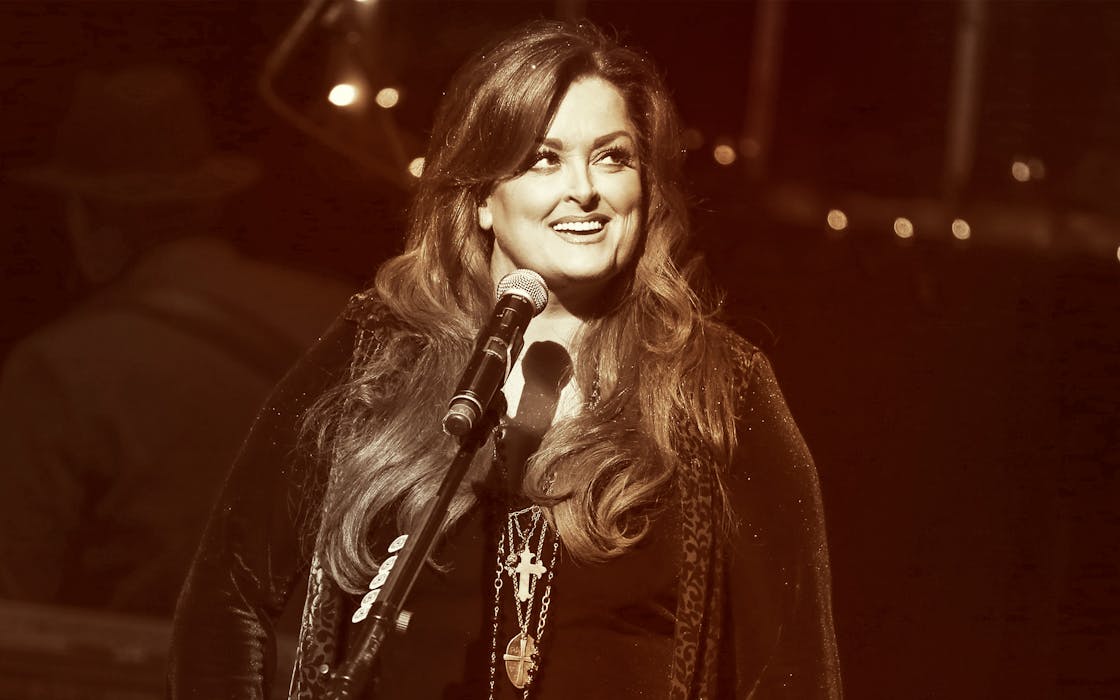
Country music legend Wynonna Judd first heard “Blue Eyes Crying in the Rain” as a young girl splitting her time between her mom’s house in Los Angeles and her grandparents’ home in rural Kentucky. It was Willie’s first No. 1 single and the song that finally made him a star, and for Wynonna, it was an early indication that a great singer could take a song he didn’t even write and make it his own.
On this episode of One by Willie, she talks about hearing it on the radio when she was first discovering music, about hanging out backstage with Willie at the CMA awards once the Judds—Wynonna and her mother, Naomi—became stars themselves, and about how kind Willie was when Wynonna introduced him to her grandmother.
We’ve created an Apple Music playlist for this series that we’ll add to with each episode we publish. And if you like the show, please subscribe and drop us a rating on Apple Podcasts or wherever you get your podcasts.
In the first ever episode of the “One for Willie” podcast I talked about @WillieNelson’s song ‘Angel Flying Too Close To The Ground’, sad songs and dirty jokes. listen here & happy 420 https://t.co/raYh4VV826
t’s been a heck of a year for Willie Nelson projects over here at Texas Monthly—we published a special issue dedicated to the legend (you can get a copy of that keepsake issue here), as well as an exhaustive ranking of all 143 of Nelson’s albums—and we’re not close to done. On October 9, we’ll be launching a new podcast called “One by Willie.”
The eight-episode series will be hosted by award-winning Texas Monthly staff writer John Spong and will feature intimate conversations with a range of prominent guests about the Willie Nelson songs that mean the most to them. Guests include Margo Price, Lyle Lovett, Jack Ingram, Wynonna Judd, and many more. As you’ll learn, these conversations aren’t just about the songs. They’re also about what music really means to us—the ways it can change us, take care of us, and connect us all. Take a listen to the trailer here:
If you like it, please subscribe—and stay tuned for Episode 1 with Margo Price, launching October 9. We’ll have a few other exciting things coming that day as well, including the online launch of that Willie Nelson special issue and a Willie video that will premiere during this year’s all-virtual Austin City Limits Music Festival.
You can subscribe to “One by Willie” on Apple Podcasts, Google Podcasts, Spotify, Stitcher, or wherever you listen to your podcasts.
The legendary musician joins us on our new podcast Biscuits & Jam.
About Biscuits & Jam: In the South, talking about food is personal. It’s a way of sharing your history, your family, your culture, and yourself. Each week Sid Evans, Editor in Chief of Southern Living, will sit down with celebrity musicians to hear stories of how they grew up, what inspired them, and how they’ve been shaped by Southern culture. Sid will take us back to some of their most cherished memories and traditions, the family meals they still think about, and their favorite places to eat on the road.
Willie Nelson is about to release his 70th album, a beautifully spare collection of originals, covers, and classics called First Rose of Spring, which is even more remarkable because it’s so good. Like the best of Willie’s albums, it’s full of heartbreak, humor, gorgeous melodies, and of course that unmistakable voice.
Willie is 87 now, but that hasn’t slowed him down much. Just before COVID-19 shut down his most recent tour, he was performing to crowds as big as 80,000 people (at the Houston Livestock Show), and he had plans to release a new gospel album. When we caught up with him for a new episode of our Biscuits & Jam podcast, he was sitting in his pickup truck at his ranch in Luck, Texas, looking at his horses (he has over 70 of them). There are worse places to be quarantined, but Willie was ready to get back on the road again. When asked if he missed being on his bus, the Honeysuckle Rose, he laughed. “Well, I miss it a lot,” he said. “It’s parked right down at the bottom of the hill, and I go down there and sit on it a while and pretend I’m going somewhere.”
Until that happens, tune in to our podcast to hear him talk about growing up in Abbott, Texas, meeting Patsy Cline for the first time, performing with his kids, and staying positive through tough times. Here are a few highlights:
On Gospel Music
“The first music I learned to play was gospel music and Amazing Grace. It was one of the first songs I learned to sing, and this kind of music has kind of carried me through the years.”
On His Military Service
“I was at Keesler Air Force Base for a while, and…the top Sergeant in there…liked music, so we would play little concerts for him, and he loved it.”
On Tootsie’s Orchid Lounge in Nashville
“Tootsie was a great friend of mine, and she had a hatpin, and if you gave her any trouble she’d run you out of there with that hatpin. So you had to stay halfway straight.”
On Performing with His Kids
“There’s nothing like having your kids on stage with you, especially when they’re good.”
On Staying Positive
“[There’s] nothing I can do about yesterday, there ain’t nothing I can do about tomorrow. But right now I’m pretty much in control. So this is the day that I’m living. And it’s the only one that really matters right now.”
On Healthcare Workers
“These folks are heroes. These are the ones that…are on the front lines battling one of the biggest wars, I guess, that this country has ever had to face because there is no visible enemy.”
Visit our Podcast Primer for information on how to download and listen to a podcast.
Wild horses, weed at the White House, the war in Iraq, and the weird web that ties the world of Willie Nelson’s Red Headed Stranger together. The record that gave Willie his stardom has continued to shape and change the world long after its release.
At a time when the world seems to be pulling itself apart, Willie Nelson continues to be a tie that binds—even the most disparate elements. In the Season 4 finale of The Opus, we take a walk in Willie’s boots, and bask in the glorious world he has created since Red Headed Stranger.
Host Andy Bothwell, joined by Nathanial Rateliff of Nathanial Rateliff and the Night Sweats, Jack Torrey of The Cactus Blossoms, Carla Bozulich of The Geraldine Fibbers, and Dan Solomon of Texas Monthly Magazine, takes you inside Willie’s world, and shows you just how singular it is.